
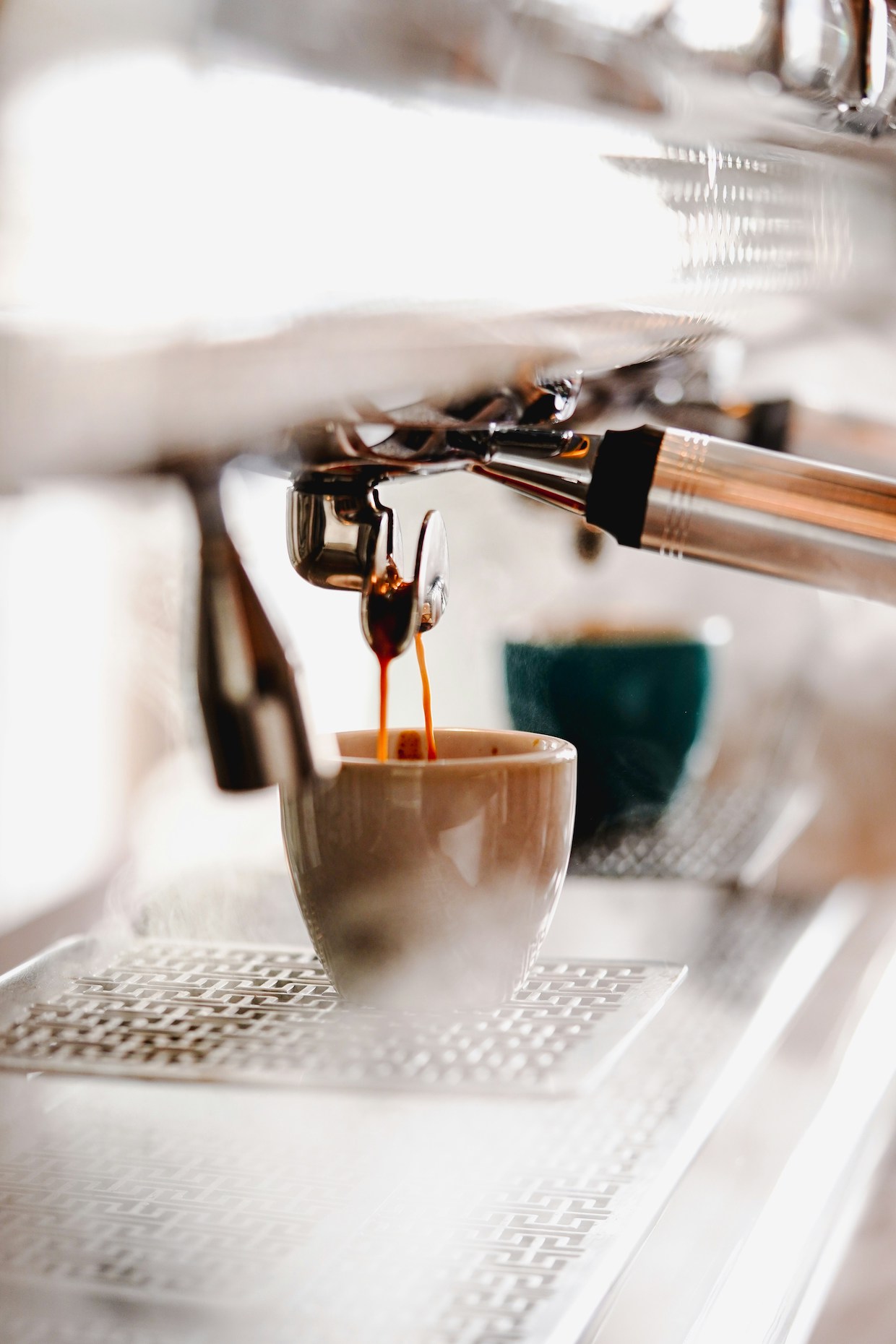
Higher pressure does not always mean faster espresso. That’s the plain-English takeaway from a new physics study on channeling and flow regulation in espresso.
According to the study, espresso grounds behave like an ordinary porous material at low water pressure, but once brewing pressure climbs into the range cafes actually use, the puck stops obeying that simple physics and flow rate quits rising with pressure.
The effect helps explain a pattern baristas have long suspected but that had not been systematically measured until now, according to a research team with affiliations in Poland and Germany.
Exploring Espresso Mysteries
The study, published June 23 in the journal Physics of Fluids, provides a technical explanation for some of the odd brewing behaviors baristas might see on a day-to-day basis, helping explain why finished shots can vary even when baristas closely control the coffee, grind setting, tamping routine, temperature and pressure.
The research grew partly out of a practical question from baristas at a coffee trade event who wanted to know how to reduce channeling, according to a University of Warsaw announcement. Channeling occurs when water finds easier paths through the puck, extracting some areas more than others and producing inconsistent or unbalanced espresso.
Simulating the Real Thing
To study that problem, the researchers built a controlled setup around a cafe-grade espresso machine.
They used a 2-group Sanremo Zoe Competition espresso machine modified with a pressure sensor, digital scale and Arduino-based data collection system, allowing them to record pressure and mass flow during brewing. The coffee was a single-origin specialty coffee from the Igarape region of Brazil, roasted by CoffeeLab Warsaw.
Each shot used 18.50 grams of coffee, ground on a Fiorenzato F64 EVO grinder, with puck preparation standardized through shaking, WDT-style needle distribution and automatic tamping at 20 kilograms of force.
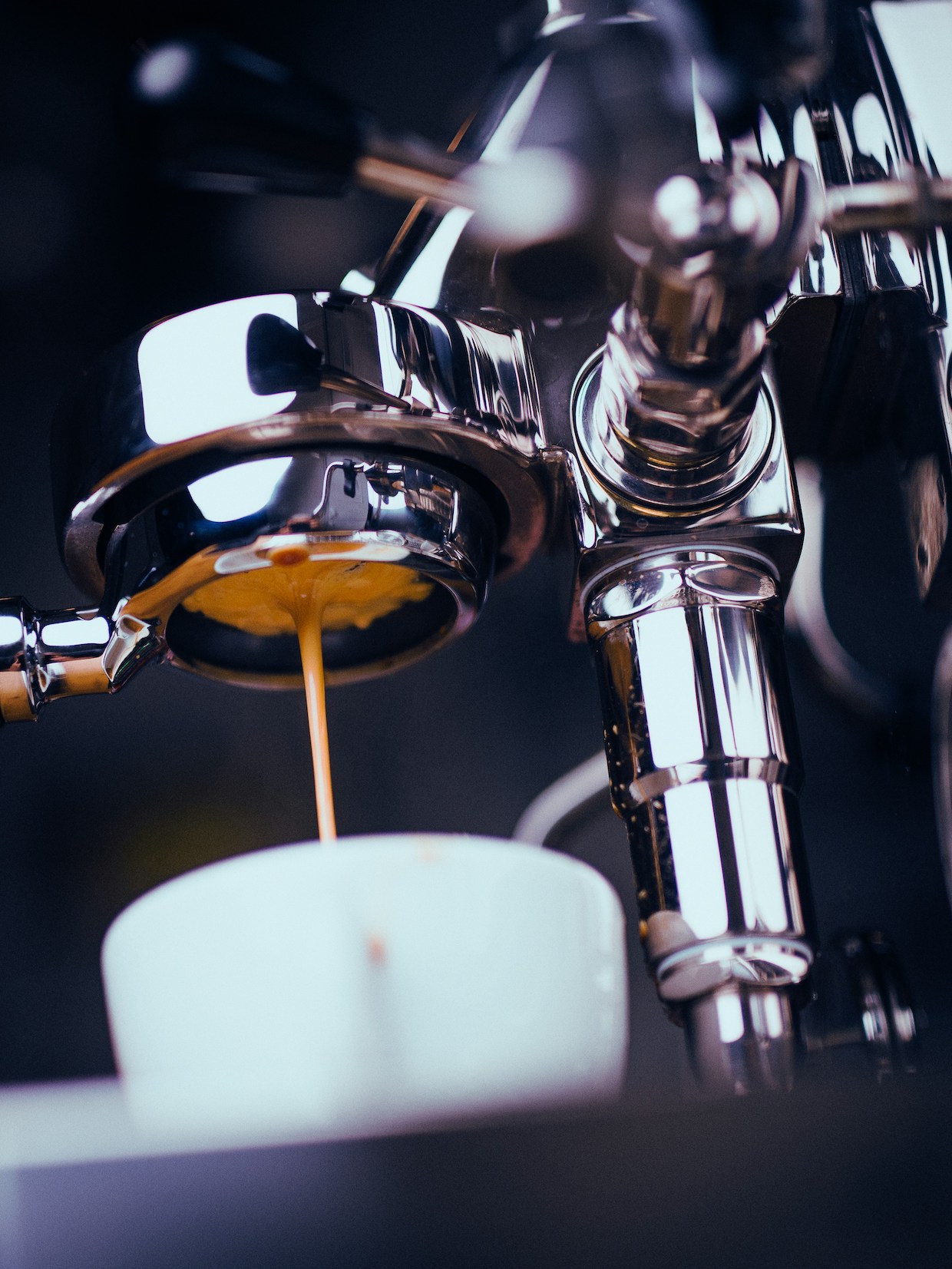
The team brewed coffees at basket pressures ranging from about 1 to 12 bar, including 60 long extractions at 11 pressure settings. The long brews, typically about 120 seconds, were not meant as drinkable espresso recipes. They were used to see how the puck behaved after most solubles had been washed out and the flow approached a stable state.
At low pressures, the coffee behaved more like an ordinary porous material, with increases in pressure corresponding with increases in flow rate. But in the 6- to 9-bar range more typical of espresso brewing, the relationship changed, with flow saturating rather than continuing to rise. The authors modeled that behavior by treating the coffee puck as a poroelastic material — like a wet, porous bed that can deform under pressure, narrowing the spaces where water moves.
“This poroelastic compaction has been alluded to in the coffee community, but with no systematic evidence,” Lisicki said in an announcement of the publication. “I think we characterized this effect for the first time, and that enticed us to formulate a theoretical description.”
TDS Changes
The study also examined how solubles leave the puck over time. In one experiment, the researchers split an espresso into 5-second fractions and measured total dissolved solids, or TDS, with a refractometer.
The earliest liquid contained the highest concentration of dissolved coffee material, around 25% TDS, while concentration fell sharply later in the brew, approaching zero by about 60 seconds. The authors concluded that dissolution dynamics — the rate at which soluble coffee material leaves the puck — play a central role in how flow evolves during extraction.
Structural Cues
The researchers also used X-ray microtomography to image the coffee puck before and after brewing. Those scans showed swelling, cracks and delaminations after brewing, offering a visual look at how the puck can physically change during extraction.
The paper also found that stopping and restarting the brew cycle increased flow without causing additional dissolution, suggesting that repeated brewing through the same puck — as when trying to make a long drink by running the machine multiple times — may lead to extraction inconsistency.
Espresso Research is Flowing
The paper adds to a growing collection of research on espresso physics and mathematical modeling.
DCN recently covered a Royal Society Open Science study that used X-ray computed microtomography and fluid-flow simulations to model permeability in coffee beds. A 2023 Physics of Fluids study explained how finer grinds can sometimes produce weaker espresso through uneven extraction. There was also a 2020 study that challenged conventional espresso recipes by arguing for lower doses, coarser grinds and faster shots.
The new study adds pressure, literally, to the discussion. It does not provide a simple new recipe for cafes, and it does not set out to prove that 9 bars is always best. Instead, it helps explain why more pressure is not necessarily better, and why other variables such as puck preparation, grind distribution, dose and particle size are all part of the consistency equation.
The study was funded in part by the University of Warsaw IDUB program.
Comments? Questions? News to share? Contact DCN’s editors here. For all the latest coffee industry news, subscribe to the DCN newsletter.