
All products are independently selected by our editors. If you buy something, we may earn an affiliate commission. Learn More >
Ask five coffee people how to get better tasting water for brewing and you’ll get five different answers, most of which land on some version of “just use filtered water” and leave it there.
That advice sounds fine until you actually taste what proper brewing water does to a cup. I’ve been mixing my own coffee water for years, and once you get the ratios sorted, you’ll wonder why anyone bothers settling for whatever comes out of the tap.
Let’s take a closer look, you’re going to love this!
Why Your Tap Water Is Ruining Your Coffee
I’ve watched people buy a beautiful bag of beans, dial in a grinder to the exact micron, and then pour tap water straight into the kettle without a second thought.
Water makes up about 98 percent of your cup, so if it’s off, your coffee is off too, no matter how good the beans are.
Chlorine, heavy mineral content, or water that’s almost mineral free will all flatten your coffee in different ways. Chlorinated water tastes like a swimming pool changed careers. Hard water mutes the bright, fruity notes you paid good money for.
And water with almost nothing in it, like straight distilled water, pulls flavor out of your coffee but can’t carry it properly, so you end up with something thin and a bit sad.
Making your own coffee water gives you control over all of that, and it’s a lot more achievable than it sounds.
What Actually Makes Water Good for Coffee
Good brewing water isn’t about purity. It’s about balance. You want a small, specific amount of the right minerals in there, not zero and not too many.
The minerals that matter
Calcium and magnesium are the two big players. They bond with flavor compounds during extraction and pull them into your cup.
Magnesium tends to bring out brightness and fruit notes, while calcium leans more toward body and roundness. Bicarbonate acts as a buffer, stopping your coffee from tasting sharp or sour, but too much of it will make your brew taste dull and flat.
What to avoid
Skip water that’s high in sodium or chlorine. Sodium doesn’t do your coffee any favors and chlorine will always taste like chlorine, coffee or not.
And don’t assume distilled water on its own is the answer. It’s a great starting point because it’s a blank canvas, but drinking it straight through your coffee gives you nothing for the minerals to grab onto.
The Simple DIY Coffee Water Recipe
If you want an easy way to make diy water for coffee without a scale, this version gets you most of the benefit for very little effort.
- Fill a 1 gallon jug with distilled or reverse osmosis water
- Add a quarter teaspoon of baking soda
- Add an eighth of a teaspoon of Epsom salt
- Shake it well until everything dissolves, then let it sit for ten minutes
That’s it.
It won’t be lab accurate, but it’ll be miles better than tap water and noticeably better than plain distilled water. I use this version myself on busy mornings when I can’t be bothered pulling out a scale.
The Precision DIY Coffee Water Recipe
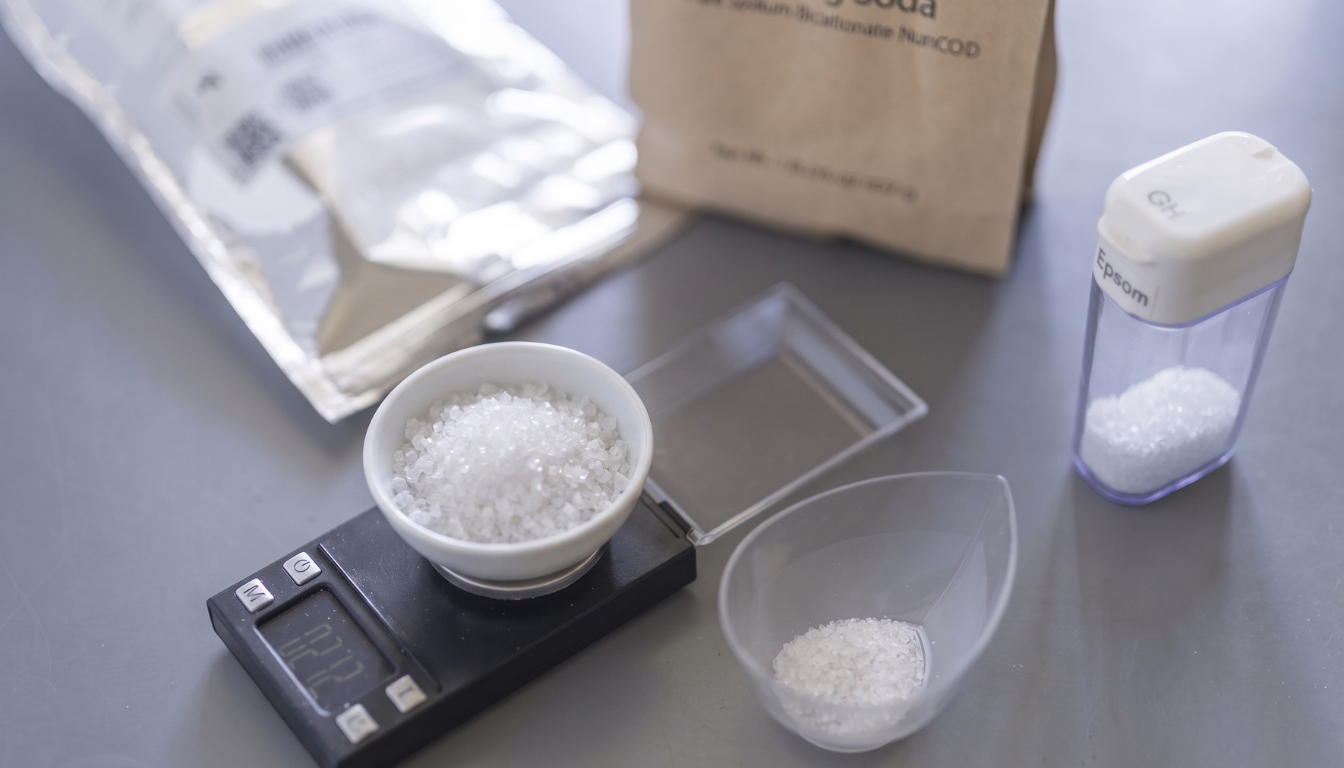
For anyone who wants a proper diy coffee water recipe with repeatable results, you’ll need a scale that measures in tenths of a gram, distilled water, baking soda, and Epsom salt.
Start by making a concentrate. Dissolve 3.5 grams of Epsom salt and 1.5 grams of baking soda into 150ml of distilled water in a small bottle. Shake until it’s fully dissolved. This concentrate is your seasoning, and a little goes a long way.
To build your brewing water, add 5ml of the concentrate to every liter of distilled water.
That gives you a balanced mineral profile that sits comfortably in the range specialty coffee professionals aim for. If your coffee tastes a bit closed off or one dimensional, bump it up to 6ml per liter. If it tastes heavy or slightly chalky, drop back to 4ml.
Keep a small notebook of your ratios if you’re experimenting with different coffees.
Washed Ethiopians and other delicate beans tend to shine with a touch more magnesium, while darker roasts and espresso can handle a bit more calcium for body.
Where to Buy the Minerals
Not all Epsom salt or baking soda is the same.
Buy food grade Epsom salt, the kind sold for baths is usually fine as long as it’s labeled pure magnesium sulfate with no added fragrance or additives.
For baking soda, plain old Arm & Hammer or any pure sodium bicarbonate from the baking aisle works well. Avoid pool chemicals, garden fertilizer, or anything labeled for industrial use.
They might share a chemical name, but you have no idea what else is mixed in.
How to Tell If Your Water Recipe Is Working
The real test of how to make coffee water properly isn’t a chemistry set, it’s your tongue. Brew the same coffee with your tap water and your DIY water side by side and taste the difference.
If your coffee tastes flat or muted, your water probably needs more minerals. If it tastes sour or sharp, add a touch more baking soda to bump up the buffer.
If it tastes metallic or oddly heavy, you’ve likely overdone the concentrate, so dilute it down. Trust your palate here.
You don’t need a TDS meter to notice when a cup suddenly tastes clearer and sweeter.
How Long Does DIY Coffee Water Last
Your finished brewing water keeps well for about two weeks if you store it in a sealed container in a cool spot away from direct sunlight.
The concentrate itself lasts longer, closer to a month, since it’s more stable in its undiluted form. Label your bottles with the date you made them.
It sounds fussy, but old concentrate can throw your ratios off without you realizing why your coffee suddenly tastes different.
Is DIY Coffee Water Worth It Compared to Premixed Packets
Premixed mineral packets are convenient. You drop one in a gallon of distilled water and you’re done, no scale or shopping trip required.
They cost more per liter than making your own, but you’re paying for that convenience.
DIY coffee water costs a fraction of the price once you’ve bought your ingredients, and a small bag of Epsom salt and box of baking soda will last you months.
The trade off is a bit of upfront effort and a short learning curve while you dial in your ratios. If you brew coffee daily and care about getting it right, the DIY route pays for itself fast. If you brew occasionally and just want convenience, premixed packets might suit you better.
Final Thoughts
Water is the ingredient nobody talks about until they taste the difference for themselves. Once you’ve had a cup brewed with properly balanced water, it’s hard to go back to whatever comes out of your tap.
Start with the simple recipe, see if you notice a difference, and work your way up to the precision method if you get hooked.
What does your tap water taste like on its own? That’s usually the first clue about how much it’s holding your coffee back.