All products are independently selected by our editors. If you buy something, we may earn an affiliate commission. Learn More >
If you’ve spotted “white coffee” on a menu and wondered whether someone swapped your espresso for milk, you’re not alone.
I get asked this constantly, and the honest answer surprises most people: it has almost nothing to do with milk at all. White coffee is a roast, not a recipe, and once you understand that, the rest of it clicks into place fast.
Let’s clear up the confusion, grab a coffee, and keep reading.
What White Coffee Actually Is
Let’s clear up the basics before anything else.
White coffee starts life as the same green coffee bean you’d use for any other roast. The difference comes down to timing.
Roasters pull the beans well before the first crack, at a much lower temperature than a typical light roast, somewhere around 325°F instead of the 400°F plus you’d see for a standard light roast.
That short, gentle roast leaves the beans pale, dense, and almost dry to the touch.
They never get the chance to caramelize the way a medium or dark roast does, and that’s exactly why the flavor turns out so different.
Three Drinks, One Confusing Name
This is where most explanations fall apart, so let’s untangle it properly.
The white coffee you’re probably picturing, the trendy café version showing up across the US and parts of Europe, is that ultra light roast I just described.
But travel to Malaysia and “white coffee” means something else entirely. Ipoh white coffee gets roasted with margarine or palm oil, then brewed and mixed with sweetened condensed milk, which is where the white color actually comes from.
Head over to Yemen and you’ll find a similar low temperature roasting tradition that’s been around for centuries, often finished with a spice blend called hawaij.
And if you’re in the UK, “white coffee” just means regular coffee with milk in it, nothing more exotic than that.
Three completely different drinks, one shared name. No wonder people get mixed up.
What Does White Coffee Actually Taste Like
Forget everything you know about your usual cup for a second.
Because the beans never reach caramelization, you won’t get any of that chocolate, toffee, or deep roasted flavor you’re used to.
Instead, white coffee tastes grainy and nutty, closer to raw oats or peanut butter than coffee as you know it. It carries a light sweetness with almost no bitterness, and a lot of people compare the mouthfeel to a pale green tea rather than a bold espresso.
It’s an odd first sip if you’re coming straight from a dark roast habit. Give it a chance though, because the flavor grows on you once you stop expecting it to taste like coffee.
Does White Coffee Really Have More Caffeine
Here’s where I want to set the record straight, because this claim gets repeated everywhere without much scrutiny.
You’ll see it stated as fact all over the internet: white coffee supposedly packs 50 to 70 percent more caffeine than a regular roast.
It’s a catchy claim, and it makes sense on paper since caffeine does break down slightly the longer beans roast. But the research doesn’t back up numbers that dramatic.
Studies looking at roasting and caffeine content consistently show the gap between light and dark roasts is real but modest, nowhere close to the dramatic claims floating around online.
So yes, white coffee holds onto a touch more caffeine than a dark roast, but the “half again as strong” claim is mostly marketing dressed up as science.
If you want a genuinely stronger cup, brewing method and bean type will move the needle far more than roast color ever will.
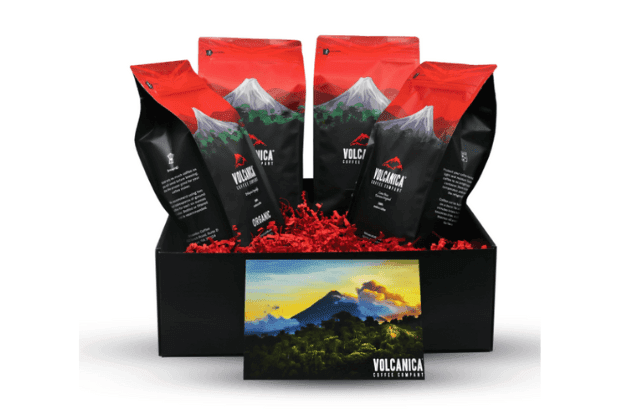
Volcanica Coffee Lover Gift Box
The perfect gift box for the average avid coffee drinker, this gift box includes the best-selling products all in one package. Explore the taste of favorite coffees from around the world from the comfort of home.
How to Brew It Without Ruining It
White coffee rewards a bit of extra care, so here’s what actually works.
Those underdeveloped beans are noticeably harder and denser than a normal roast, which means a cheap blade grinder will chew through them unevenly and leave you with a gritty, inconsistent cup.
A quality burr grinder handles them far better. For brewing, skip your regular drip machine.
Espresso and Aeropress both apply enough pressure to pull real flavor out of a bean that’s fighting you the whole way, while drip brewing tends to leave the cup thin and underwhelming.
A few practical pointers before you start:
- Grind slightly finer than you would for a light roast, since the hard beans resist extraction
- Use hotter water than usual, closer to boiling, to help compensate for that resistance
- Start with a stronger dose than normal and adjust from there, since white coffee pulls less flavor per gram
Who Should Actually Try White Coffee
Not every coffee drinker needs to add this to their rotation, and that’s fine.
If your stomach gets irritated by acidic coffee, white coffee’s lower acidity might genuinely help, since the shorter roast time means fewer of the acids that build up during longer roasting.
It also suits anyone bored of the usual flavor wheel and curious about something that barely resembles coffee as they know it.
What it isn’t is a reliable way to chase a bigger caffeine hit. If that’s your goal, look at your brew method and bean origin before you look at roast level.
Final Thoughts
White coffee isn’t the caffeine bomb the internet wants it to be, and it definitely isn’t one single drink no matter what name tag gets slapped on it.
It’s a genuinely different coffee experience once you know what you’re actually ordering and how to brew it properly.
Curious enough to give it a shot?
Grab some whole white coffee beans, pull out the Aeropress, and see what you think. Let me know in the comments how you get on!