
Estimated reading time: 6 minutes
Key takeaways
- Italian heritage still matters in coffee equipment, but innovation now earns lasting trust.
- Record US specialty coffee demand is raising equipment performance expectations.
- Local support beats remote service for high-volume coffee accounts.
- Fiorenzato‘s New Jersey hub delivers Italian precision with direct US support.
Specialty coffee is no longer a niche category chasing credibility. Across many markets, roasters and cafés have matured into demanding operators who expect their equipment to deliver more: tighter extraction consistency, faster service during peak hours, and workflows that hold up under pressure.
For decades, “Made in Italy” stamped on espresso machines and grinders was enough to signal quality. While it still carries weight, it no longer provides real-world assurance on its own.
“The perception of Italian heritage is still extraordinary,” says Nicholas Benaglia, Sales Area Manager for the UK, Northern, Central, and South America at Fiorenzato. “For Americans, Italy is still synonymous with coffee engineering. But tradition alone isn’t enough anymore.”
Coffee professionals today want equipment manufacturers who combine proven engineering with active, ongoing innovation.
“US professionals want targeted innovations that streamline daily operations,” Nicholas says. “They see us as a brand that doesn’t just build grinders – we understand where coffee consumption is headed.”
You may also like our article on whether we’re entering a new era for coffee grinder technology.

Demands on coffee equipment are growing
As specialty coffee matures across key international markets, the expectations placed on grinders, espresso machines, and batch brewers are rising. Roasters and cafés no longer want equipment that looks good and performs well; they need precise and consistent extraction, workflows that let baristas focus on coffee and customers, and faster performance to handle busy rushes.
This shift is especially visible in countries like the US. According to the National Coffee Association’s Spring 2026 data, a record 58% of US adults had consumed specialty coffee in the previous week, meaning coffee brands need to meet rising demand for higher-quality coffee.
Heritage claims like “Made in Italy” are still shorthand for engineering excellence, but they function differently now. Parallels can be drawn with the fashion industry, where luxury Italian brands, long revered for handmade products and painstaking attention to detail, have to compete with AI and modern technology.
Cutting the distance: why local operations matter
The global race for innovation in coffee equipment adds extra pressure. “Made in China” once carried a stigma in specialty coffee, but now signals sophisticated technology, reliable performance, and significantly lower prices than their Western counterparts.
Established equipment manufacturers worldwide now need to innovate faster, manage production costs, or find new ways to differentiate their machines.
In this context, closer supplier-customer relationships help build trust. Fiorenzato, a 90-year-old Italian coffee equipment manufacturer, has responded to the shift with a new US hub in New Jersey, pairing its manufacturing heritage with modern innovation.
“Managing the market remotely from Europe meant unavoidable constraints,” Nicholas explains. “Large chains and specialty roasters need total reliability.”
Supporting high-volume US accounts from across the Atlantic comes with built-in friction: time zones don’t line up, shipping lead times stretch, and small delays compound into operational headaches.
“Having a physical outpost in New Jersey puts us right there with US customers, delivering equipment and support in record time,” Nicholas says. “Proximity is what earns long-term trust.”
With inventory and technical support much closer, equipment manufacturers can minimise delays and build closer partnerships with customers who need dependable turnaround.

Accommodating the needs of a global market
Serving an international market takes more than shipping well-built, reliable espresso machines and grinders overseas. Equipment brands operating across borders also need to understand how each market works, from workflow in a high-volume US chain to how an independent Asian roaster expects ongoing support once equipment is installed.
“There’s a growing realisation that extraction quality is won or lost at the grinder – down to the milligram and the fraction of a millimetre,” Nicholas says. “Whether a barista is dialling in a rare single origin or running a high-volume espresso programme, this level of precision is what the job demands now.”
Fiorenzato‘s approach in the US has been to build this understanding directly into its product development process, rather than treating the market as a distant sales territory. Instead of forecasting demand from a distance, Fiorenzato’s new US hub now allows direct input from US baristas and roasters to guide what it builds next.
Nicholas says this feedback loop has sharpened the company’s focus on the kind of precision high-volume specialty operations now expect.
“It’s not about reacting to competitors, but setting new technical standards,” he explains. “Being on the ground gives us an invaluable feedback loop from one of the most dynamic coffee markets in the world. It fuels our R&D and makes sure we’re building the tools this industry is going to need next.”
Building innovation from the bar up
Looking toward late 2026, two-way feedback is central to Fiorenzato‘s growth strategy. The company plans to grow partnerships with local specialty roasters and turn the New Jersey facility into an educational hub focused on grinding precision and espresso science.
Nicholas explains that direct feedback from American baristas and roasters helps shape product development in real time, using the New Jersey hub as much a listening post as a distribution centre. Ideas from behind the bar in Seattle or Chicago now feed straight back into engineering decisions made in Italy.
Positioning the New Jersey hub as a training ground also signals that equipment brands see education, not just distribution, as part of how they compete for long-term customer relationships.
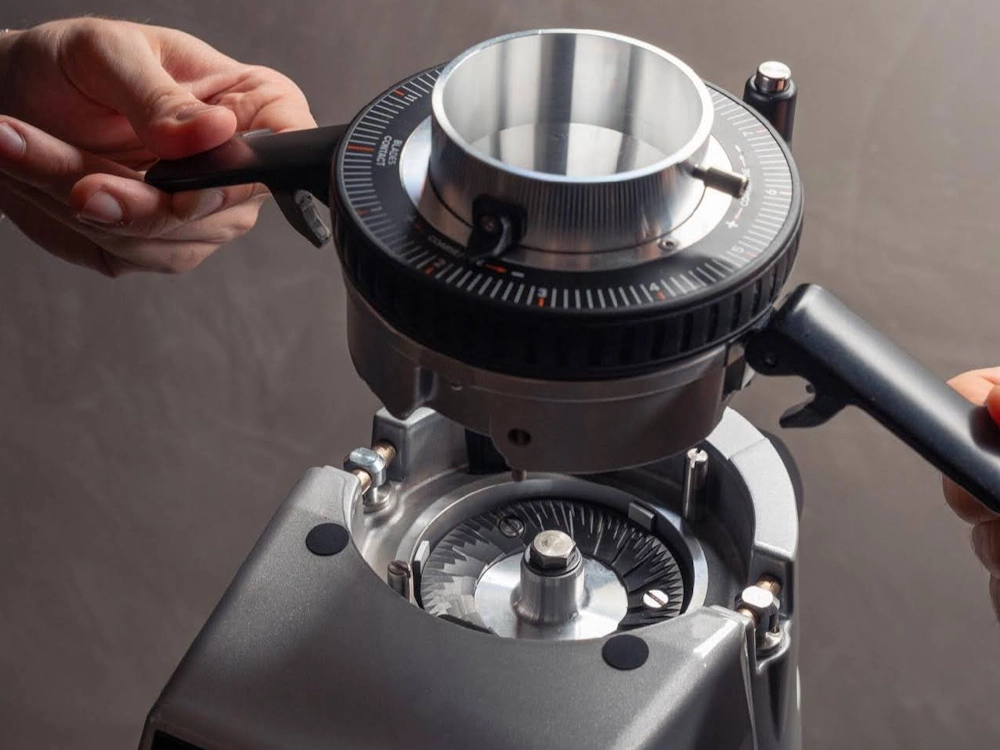
Heritage still matters in coffee equipment, and Italian manufacturing history continues to carry weight with international buyers.
But both now have to combine with modern approaches: local presence, faster support, and product development that listens directly to the people using the machines every day.
Enjoyed this? Then read our article on how hand grinders are changing.
Coffee equipment FAQs
Does “Made in Italy” still matter for coffee equipment?
Italian heritage still signals quality to many buyers, particularly in the US. But industry professionals say the label alone no longer guarantees performance. Manufacturers now need to show ongoing innovation alongside their manufacturing history to meet rising expectations from roasters and cafés.
Why are some coffee equipment manufacturers opening local hubs in markets like the US?
Serving a market from overseas creates delays: mismatched time zones, longer shipping times, and slower support. Local hubs put inventory and technical support closer to customers, cutting turnaround time and helping manufacturers respond faster to high-volume roasters and chains that need reliable service.
What is changing in how coffee equipment brands compete internationally?
Manufacturers increasingly compete on precision, proximity, and direct feedback rather than heritage alone. Industry figures say local hubs let engineers hear directly from baristas and roasters, feeding real operational needs into product development rather than forecasting demand from a distance.
Photo credits: Fiorenzato
Perfect Daily Grind
Please note: Fiorenzato is a sponsor of Perfect Daily Grind.
Want to read more articles like this? Sign up for our newsletter!